
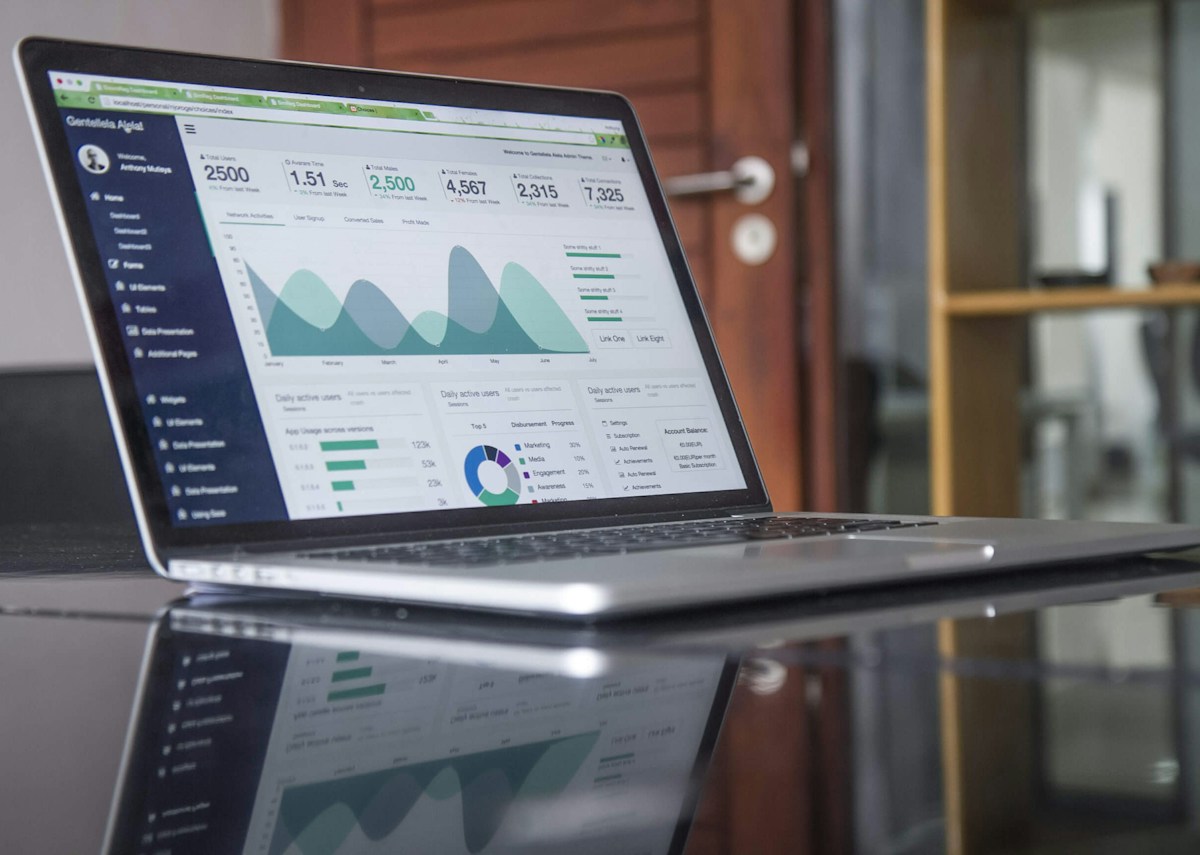
SEO in 2025 rewards businesses that genuinely serve their audiences. Technical precision, content depth, and user experience are no longer separate disciplines — they are a single unified strategy.
Why SEO Keeps Evolving in 2025
For the past decade, businesses have been told that SEO is about ranking for keywords. While that framing was never entirely wrong, it was dangerously incomplete — and the gap between that simplified understanding and the reality of how modern search works has never been wider.
Google processes more than 8.5 billion searches per day. Its entire business model depends on connecting users with the most relevant, trustworthy, and helpful content for every query. Every algorithmic update — Helpful Content, Core Updates, the March 2024 Spam Update — is a refinement of that single mission. The businesses that win in 2025 are not the ones who 'game' the algorithm. They are the ones whose digital presence genuinely deserves to rank.
This shift demands a more sophisticated approach. Below, we cover the ten strategic pillars that our team has identified as the most impactful areas of investment for businesses seeking sustainable organic growth in 2025 and beyond.
1. UX Signals & Core Web Vitals
Google's Page Experience signals formalized something SEO professionals had long known: a website that frustrates users cannot rank well for long, regardless of its backlink profile. Core Web Vitals — the three metrics that measure loading speed, interactivity, and visual stability — are now firmly embedded in Google's ranking considerations.
The thresholds matter: Largest Contentful Paint (LCP) should be under 2.5 seconds. Interaction to Next Paint (INP), which replaced First Input Delay in 2024, should be under 200 milliseconds. Cumulative Layout Shift (CLS) should remain below 0.1. Sites failing these benchmarks face a measurable ranking disadvantage — but more importantly, they deliver experiences that drive users straight back to the search results page, a behavior Google tracks as a negative engagement signal.
Beyond the specific metrics, the broader principle applies: every design and development decision should reduce friction. Intrusive pop-ups, auto-playing videos, and navigation structures that require more than three clicks to reach key content — all of these erode the UX quality that modern SEO demands.
Run a Core Web Vitals audit via Google Search Console and PageSpeed Insights. Prioritize LCP improvements first — they typically deliver the largest ranking impact for the lowest development effort.
2. E-E-A-T: Content That Earns Trust
Google's quality evaluator guidelines introduced Experience as a fourth pillar alongside Expertise, Authority, and Trust — updating the well-known E-A-T framework to E-E-A-T. The addition is significant: it signals that Google is not just looking for credentialed expertise, but for evidence that the content creator has first-hand, real-world experience with the subject matter.
For service businesses, this means content written by practitioners — not generic articles produced by non-specialist writers — outperforms in the long run. A healthcare clinic's blog post authored by a named physician with published credentials will consistently outperform one written anonymously.
Practically, building E-E-A-T means investing in: clearly identified authors with linked professional profiles, original research and proprietary data, case studies with verifiable outcomes, structured review processes, and external citation from credible industry sources.
3. Technical SEO Foundations
Technical SEO is the infrastructure on which all other efforts rest. A site with exceptional content and strong backlinks but a broken crawl architecture will not reach its ranking potential.
The fundamentals remain constant: clean URL architecture, XML sitemap health, robots.txt precision, canonical tag management, and structured data implementation. JavaScript rendering is still a source of indexation problems for sites built on modern front-end frameworks.
Schema markup deserves special attention. Structured data for FAQs, products, reviews, local businesses, and articles enables rich result features that dramatically improve click-through rates — sometimes delivering 2–3x the CTR of standard blue link listings for the same position.
4. Topical Authority & Content Clusters
The era of publishing isolated blog posts targeting individual keywords is effectively over for competitive verticals. Google's systems have become sophisticated enough to evaluate topical authority — whether a website demonstrates comprehensive, expert-level coverage of a subject area.
The content cluster model addresses this directly. A central "pillar page" covers a broad topic comprehensively (typically 3,000–5,000 words), while a constellation of supporting "cluster pages" each address specific subtopics in depth. Internal links connect the cluster, distributing authority and signaling topical expertise.
For a real estate agency targeting buyers in Dubai, the pillar page might be "Complete Guide to Buying Property in Dubai" supported by clusters on neighborhoods, off-plan vs. ready properties, the legal process, financing options, and developer comparisons.
SEO Service
Our multilingual SEO team works across EN, AR & TR markets — with proven results across real estate, healthcare, and e-commerce.
5. Multilingual & International SEO
For businesses operating across MENA, Turkey, and international markets, multilingual SEO is one of the highest-leverage investments available. The Arabic web remains significantly underserved by high-quality content despite representing one of the world's fastest-growing internet user bases.
Effective international SEO requires more than translation. It demands cultural localization — adapting examples, idioms, trust signals, and visual content to resonate with local audiences. It requires proper hreflang implementation to prevent duplicate content confusion across language versions.
One of the most common mistakes we see from clients entering MENA markets is publishing machine-translated content without localization. Arabic readers recognize low-quality translation immediately, and the trust damage it causes can take years to recover from.
6. AI-Overviews & Zero-Click Search
Google's AI Overviews represent the most significant change to the search results page in a decade. For a growing proportion of informational queries, Google now synthesizes an AI-generated answer at the top of results, drawing from multiple sources.
This shift has already reduced organic CTR for informational queries in categories including health, finance, travel, and general how-to content. The response is to adapt strategy in two directions simultaneously.
First, optimize to be the source cited within AI Overviews. Second, shift content investment toward queries where AI Overviews appear less frequently: high-specificity commercial and transactional queries, local searches, and complex multi-part questions.
Monitor your Search Console CTR data by query type. A decline in CTR for informational queries paired with stable or growing impressions is a clear signal that AI Overviews are impacting your traffic.
7. Local SEO for Multi-Location Businesses
Local search intent — "near me," city-specific, and neighborhood-level queries — remains one of the highest-conversion categories in organic search. A user searching "dentist in JBR Dubai" is expressing a very specific, high-intent need.
Google Business Profile (GBP) is the cornerstone of local SEO. A fully optimized, actively managed GBP listing — with accurate categories, complete service information, current photos, regular posts, and an active review response strategy — significantly outperforms neglected competitors in the Local Pack.
For businesses with multiple locations, each location needs its own GBP listing, its own dedicated landing page with locally relevant content, and its own citation profile across key local directories.
8. Link Building in the Modern Era
Backlinks remain one of Google's strongest ranking signals — but the rules have changed dramatically. In 2025, a single link from a well-regarded industry publication outweighs hundreds of links from low-authority directories or private blog networks.
The most sustainable link acquisition strategies earn links naturally through genuine value creation: original research, expert commentary in industry media, digital PR campaigns, and resource pages that become genuine reference tools.
The MENA link-building landscape offers particular opportunities. Arabic-language media outlets and industry associations are often eager for high-quality content contributions from established businesses — and the competition for those placements is significantly lower than in Western markets.
Your 2025 SEO Action Plan
Strategy without execution is worthless. Based on everything covered above, here is a practical starting framework for the next 90 days:
Week 1–2: Run a full technical audit. Identify Core Web Vitals failures, crawl errors, broken internal links, and schema markup gaps. Week 3–4: Conduct a content audit. Identify pages with ranking potential but thin content, which are cannibalizing each other, and which should be consolidated.
Month 2: Map your topical authority structure. Define your pillar pages and content cluster topics for the next six months. Month 3: Launch a local SEO initiative if applicable. Ongoing: Publish one high-quality cluster article per week and conduct link outreach for your best content assets.
Related Insights
Hand-picked articles to deepen your expertise

Why Premium Branding Is Your Best Long-Term Investment
In markets saturated with options, the difference between a brand that commands premium pricing and one that competes on price alone comes down to the quality of its identity.

Maximizing ROI on Meta & Google Ads in MENA Markets
Running paid advertising in the Middle East requires a nuanced understanding of audience behavior, platform dynamics, and cultural context that global playbooks often miss.