
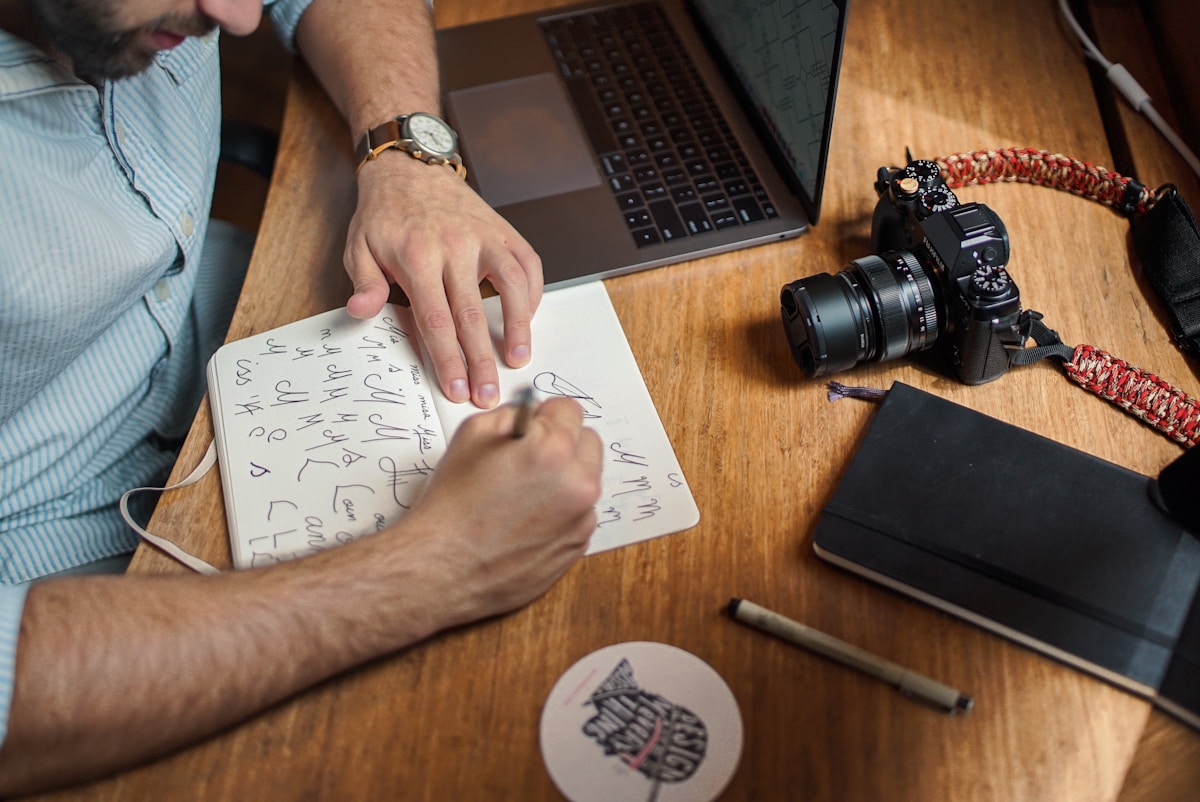
A professionally crafted brand identity is not a design expense — it is a compounding commercial asset that reduces acquisition costs, increases retention, and unlocks premium pricing for years.
The Real Cost of Weak Branding
Most business owners understand that branding matters. Fewer understand the specific, quantifiable ways that weak branding costs them money every single day. When a prospect visits your website and cannot immediately understand what you do, who you serve, and why you are different — they leave. When a potential client sees inconsistent visuals across your website, social profiles, and printed materials — they subconsciously register a lack of professionalism. When your pricing is challenged on every deal — it is often because your brand has not established the perceived value that justifies your rates.
These are not abstract brand problems. They are revenue problems. They manifest as longer sales cycles, higher churn, lower average deal values, and a constant battle to differentiate on price rather than value. The cost of weak branding does not appear on a balance sheet — but it is real, and it compounds over time exactly as strong branding does.
In MENA markets specifically, where purchasing decisions in real estate, healthcare, and professional services are heavily influenced by trust and perceived prestige, the cost of under-investment in brand identity is particularly acute. Consumers in Dubai, Riyadh, and Istanbul are sophisticated, internationally traveled, and have high exposure to world-class brand experiences. A website or visual identity that would have been acceptable five years ago now signals mediocrity.
What Premium Branding Actually Is
Premium branding is not about expensive logos or fancy fonts. It is the strategic alignment of every visual, verbal, and experiential signal your business sends into the world — so that those signals consistently communicate value, credibility, and differentiation to your target audience.
A premium brand system includes: a rigorously researched positioning strategy, a distinctive visual identity (logo, color system, typography, photography style), a clear and consistent verbal identity (tone of voice, messaging hierarchy, key messages by audience), and defined standards for how the brand applies across every touchpoint — website, social media, proposals, packaging, signage, and team communications.
The power of a premium brand system is coherence. When every customer touchpoint sends the same signal, the cumulative effect on perception is exponential. Customers feel they know what to expect. Trust is established faster. Price objections diminish. Referrals increase. And the brand itself becomes a defensible competitive asset that competitors cannot easily replicate.
The ROI Mechanics of Brand Investment
How does branding actually generate return? The mechanism operates across multiple revenue dimensions simultaneously, which is why its impact can be difficult to isolate in short-term reporting but impossible to ignore over a 3–5 year horizon.
Customer Acquisition Cost (CAC): A strong brand generates inbound interest and reduces the friction required to convert prospects. Companies with high brand recognition spend significantly less per acquired customer than those competing on undifferentiated value propositions. Studies across B2B and B2C sectors consistently show CAC reductions of 25–35% following professional brand implementations.
Price Premium and Margin: The clearest financial signal of brand strength is pricing power. Businesses with strong brand identities command premiums of 20–40% above category averages — not because their products or services are categorically superior, but because the brand has established a perception of superior value. This premium flows directly to margin.
Customer Lifetime Value: Brand trust increases retention. Customers who feel connected to a brand — who identify with its values and recognize its consistency — are less likely to churn and more likely to expand their relationship over time. In service businesses, this translates to longer retainer relationships, more referrals, and higher upsell rates.
Calculate your current average CAC and customer LTV. Then model what a 20% reduction in CAC and 15% increase in LTV would mean for your business over 3 years. That number is the minimum floor of what professional branding could deliver.
Real Estate: A MENA Case Study
The MENA real estate sector is one of the most branding-intensive environments in the world. Developers compete for attention from an international buyer base — Gulf nationals, European investors, South Asian diaspora, and regional HNWIs — who make decisions based on perceived prestige as much as product specifications.
We worked with a mid-tier residential developer in Dubai who was competing primarily on price and unit specifications. Their marketing materials were functional but generic — identical in feel to dozens of competitors. After a full brand repositioning and identity overhaul, their project launch generated 40% more qualified inquiries and achieved 15% higher average per-square-foot pricing versus their previous launch. The product had not changed. The brand had.
In real estate, brand is not peripheral. For off-plan projects especially — where buyers are committing significant capital to something that does not yet exist — brand trust is the primary purchase driver. Developers who invest in brand equity consistently outperform those who invest exclusively in product and performance marketing.
Healthcare Branding in the Gulf
Healthcare in the GCC is experiencing a privatization boom, with new clinics, specialty centers, and hospital brands emerging across UAE, Saudi Arabia, and Kuwait. In this environment, brand differentiation is rapidly becoming a survival requirement rather than a growth strategy.
Patients in the Gulf are discerning healthcare consumers. They research online, compare options, read reviews, and make judgments about clinical quality based significantly on the visual and experiential signals a healthcare brand sends. A clinic with a polished, reassuring brand identity — professional photography of facilities and staff, consistent visual language across digital and physical touchpoints, a clear verbal identity that communicates care and expertise — is perceived as more competent, regardless of whether its clinical outcomes actually differ from competitors.
We helped a Dubai-based multi-specialty clinic refresh their brand identity ahead of a second-location expansion. The rebrand reduced new patient acquisition time from 14 days to 8 days average, and patient satisfaction scores improved — not because clinical processes changed, but because the brand experience from first digital touchpoint to in-clinic visit felt more coherent and professional.
Branding Service
We design brand identities for ambitious businesses across MENA, Turkey, and international markets — from strategy to final visual system delivery.
Hospitality: Where Brand Is Everything
Hospitality is perhaps the purest test of branding, because the product is almost entirely experiential. Hotels, restaurants, and leisure businesses compete on feeling — and feeling is engineered by brand design more than any other discipline.
The most successful hospitality brands in the Middle East — from boutique beachfront resorts in Muscat to urban restaurants in Beirut and Istanbul — share a common trait: every element of the guest experience has been intentionally designed to reinforce a central brand idea. The logo, the menu typography, the staff uniform, the Instagram aesthetic, the playlist in the lobby — all of it communicates the same thing.
For regional hospitality operators competing with international chains, brand investment is the primary mechanism for building loyalty that the global brands achieve through points programs and scale. A genuinely distinctive local brand identity — rooted in cultural authenticity and executed with premium craft — consistently outperforms generic "luxury" aesthetics in driving repeat visits and word-of-mouth referrals.
The 7 Elements of a Premium Brand System
A complete brand system is more than a logo. The seven elements that make up a professionally executed brand identity are: 1) Brand Strategy — the positioning, purpose, values, and competitive differentiation that inform all creative decisions. 2) Logo System — the primary mark, variations, and usage rules. 3) Color Palette — primary, secondary, and neutral colors with specific values for digital and print.
4) Typography System — primary display font, body font, and hierarchy rules. 5) Photography and Imagery Style — art direction guidelines that ensure all visual content feels consistent. 6) Tone of Voice — the verbal personality of the brand, including sample copy and writing principles. 7) Brand Guidelines — the comprehensive document that governs how all of the above applies across every touchpoint.
Businesses that invest in all seven elements — rather than stopping at a logo — see dramatically better long-term brand performance. The guidelines document alone prevents the incremental brand erosion that occurs when different team members, vendors, or agencies make independent creative decisions without a shared reference.
When to Rebrand vs. Refresh
Not every branding challenge requires a full rebrand. Understanding when to invest in a full rebrand versus a strategic refresh can save significant time and budget while achieving the necessary outcome.
A brand refresh — updating fonts, modernizing colors, evolving the logo — is appropriate when the core brand positioning remains valid but the visual execution has dated. It preserves equity already built with existing audiences while updating the aesthetic to current standards. A refresh typically takes 4–8 weeks and is significantly less disruptive than a full rebrand.
A full rebrand is appropriate when the business has fundamentally changed its positioning, target audience, or competitive context — or when the existing brand has accumulated negative associations that need to be actively shed. Full rebrands are larger investments that require more internal alignment but deliver more transformative results when the strategic case for change is genuine.
Measuring Branding ROI
Branding ROI is real, but it requires the right measurement framework. Unlike performance marketing where attribution is direct and immediate, branding operates across longer time horizons and influences multiple revenue drivers simultaneously — making it inappropriate to evaluate using the same metrics as paid campaigns.
The most useful branding metrics fall into three categories: Brand Health Indicators (awareness, recall, sentiment — measured via periodic surveys or brand tracking tools), Commercial Indicators (CAC trends, average deal size, conversion rates from qualified leads, customer retention rates), and Competitive Indicators (share of voice in relevant search terms, share of attention in social media, win rate against named competitors in competitive RFP situations).
Establishing baseline measurements before a brand investment — and tracking the same metrics at 6, 12, and 24 months after implementation — gives a defensible picture of brand ROI that satisfies even the most skeptical board members.
How to Start Your Brand Investment
The most effective brand investments begin with strategy, not design. Before any visual work begins, investing in a positioning workshop — a structured process that clarifies your target audience, competitive differentiation, brand personality, and core messaging — ensures that all subsequent creative work is built on a strategic foundation rather than aesthetic preference.
For businesses at an early stage, this strategy-first approach is especially important: making positioning decisions early costs very little and prevents expensive course-corrections later. For established businesses refreshing their brand, the strategy phase often surfaces insights about how existing audiences perceive the brand versus how leadership wants it to be perceived — gaps that design alone cannot close.
If you are ready to explore a brand investment for your business, our team offers a complimentary brand consultation to help you define the scope, approach, and expected outcomes of a branding engagement. We have delivered brand identities for businesses across real estate, healthcare, hospitality, and professional services in Turkey, UAE, Saudi Arabia, and internationally.
Related Insights
Hand-picked articles to deepen your expertise

The Future of SEO: 10 Strategies for 2025 and Beyond
Search in 2025 is no longer just about keywords and backlinks. It is a convergence of user experience, content authority, technical excellence, and AI-readiness. This guide breaks down what actually works.
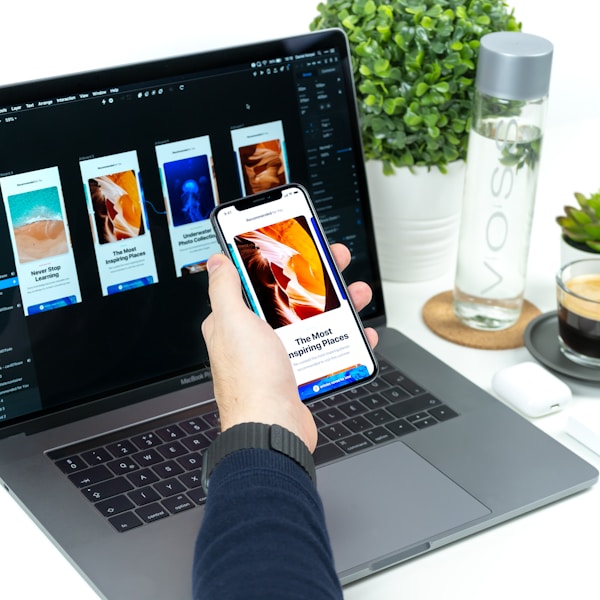
Web Design Trends That Convert: A 2025 Guide
The gap between a website that looks good and one that actually converts visitors into clients is significant — and most businesses are on the wrong side of it.